Philosophy Fridays · #001
Why do you do what you do?
On the meaning of life, ambition, and the things we pursue.
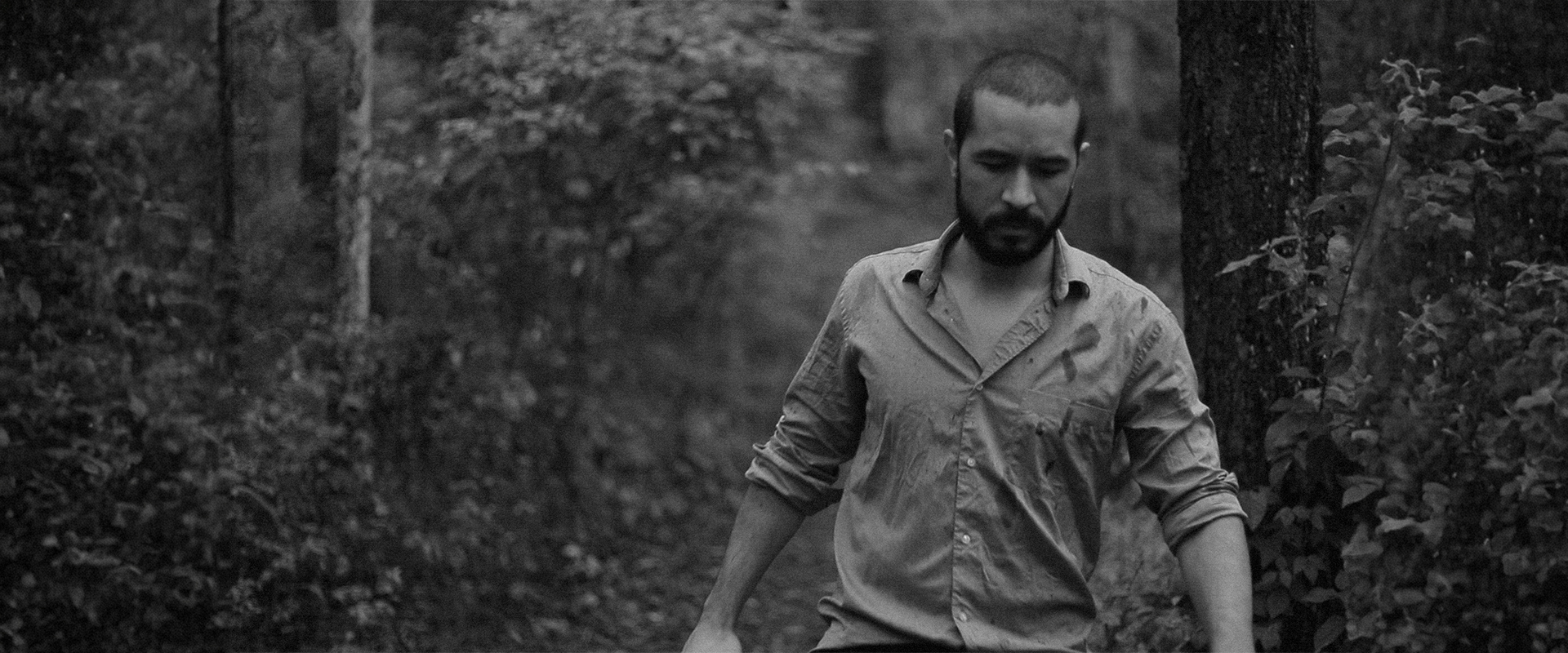
This week I came home dazed after a particularly difficult day. Mentally and physically.
Life felt like a defeat. My head down, my gaze distant, my back tense.
We've all had a day like that. Our perception clouds over, everything seems a little darker, and our thoughts won't stop spinning.
I wanted to go straight to the bedroom, escape, change my clothes, put on something comfortable. Maybe the soft fabric of a sweatshirt would bring me some relief, make me feel that the day was finally over.
The house was empty. All I could hear was the breeze coming through the gap in a window that had been left open. It was around three in the afternoon. Outside, the sun was shining, and I imagined everything was fine, that people were going about their lives as they would on any other day. But inside, in my world, everything was wrong.
Walking slowly and reluctantly down the hallway, as I passed the office, I saw a sheet of paper on the floor, as though someone had left it there.
My first thought was that it was a note from my girlfriend.
But no.
It was this poem, written by hand:
Lord, what is the point?
If I die tomorrow, what was the point of it all?
Every step, every sacrifice.
How can an idea be greater than life itself?
And if I am willing to kill for this cause…
How do I know it is a true cause?
We all believe we have the answer…
We all believe we know what is just and true…
Someone must be wrong…
So, Lord,
how does a man recognise the truth when he has spent his whole life believing he was right?
It was in my handwriting. I had forgotten about it, but I recognised it instantly.
I had written that short piece about eight months earlier for a creative project. I was trying to get inside the mind of an eighteen-year-old soldier I had imagined fighting in the Battle of Ayacucho, in 1824, during the South American wars of independence.
It was a prayer that this young man, who still knew so little of life, offered to God on the night before a battle in which he might die, in which everything could end for him.
Curiously, the poem was written on the back of a sheet of paper I had used for a sketch. I had left it among a pile of papers beside my keyboard.
The wind had moved that very sheet, sending it to the floor with the poem facing up, as though someone had left a note for me.
It may have been nothing more than a physical coincidence.
But it happened.
I held the paper in my hands and struggled to take it in. The words meant something different now. I felt a lump in my throat. I was facing that question: what is the point?
And this time it was different. It was no longer me writing for a creative project when everything seemed to be fine. It was me in the middle of exhaustion, weariness and disappointment.
The question stood clearly before me, in the solitude and emptiness of my office. I could no longer ignore it.
What is the point of all this?
It echoed inside me, as vast as the universe. With force.
This question has occupied philosophers for centuries, and at some point, many of us have asked it in different ways.
Why do we do what we do?
Why do we spend years of our lives pursuing certain things?
Why do we sacrifice our time, our peace of mind and, sometimes, our relationships to reach a goal?
Why do we get up every morning? And why, sometimes, don't we, choosing to sleep in instead?
I've noticed that when I try to explore these questions more deeply in conversation, some people prefer to change the subject.
And I can understand that.
These aren't comfortable questions. They have no simple answers, and sometimes it's easier to carry on with our everyday tasks than to stop and examine them.
But there is something I think matters.
The fact that we don't consciously question the meaning of our lives doesn't mean we live without something that motivates us and guides our decisions.
We are all pursuing something.
Recognition, security, love, money, knowledge, freedom, power, happiness, pleasure.
Sometimes several things at once. Sometimes one thing, sometimes another, without stopping to consider which matters most. Which one gives order to all the others. What force pushes our reasoning to move in a particular direction.
And this is where the question begins to connect very closely with the world we live in.
We build businesses. Develop careers. Compete for positions, gain experience, seek promotions, create products, pursue results, form relationships and surround ourselves with other human beings.
And there is nothing necessarily wrong with that.
A business can generate wealth, solve problems and improve thousands of lives. A good job can give us stability, satisfaction and the ability to care for the people we love.
Ambition can be an extraordinary force.
But what happens when the thing we pursue stops being one part of our lives and becomes the reason that seems to justify our entire existence?
What happens when our worth as people depends on the position we hold, the money we earn or the recognition we receive?
And what if we lose all of that tomorrow?
And then I return to that question in the poem:
How does a man recognise the truth when he has spent his whole life believing he was right?
Perhaps that is one of ambition's great dangers: not necessarily wanting too much, but placing the entire weight of our existence on something that can disappear.
We can spend years climbing a mountain, sacrificing rest, friendships, family and health for a position, a title, a relationship, a marriage, a project or a number, only to discover at the summit that what we were pursuing could not give us what we had hoped to find.
I'm not saying we should abandon our goals, turn our backs on success or stop pursuing big ideas.
Quite the opposite.
I believe it's worth building, creating, starting something of our own and working hard to do extraordinary things.
But I also believe it's worth asking why.
Socrates argued for the importance of examining our own lives. Aristotle reflected deeply on what it means to live well. Centuries later, other thinkers would continue to approach these questions from very different perspectives.
And although their answers don't always agree, their questions are still relevant.
I don't have the definitive answer. I'm not a teacher here to tell other people how to live.
I'm trying to understand it too. Finding my way, walking, falling, stumbling, asking questions.
That sheet of paper on the floor reminded me of something I think matters:
We can spend our entire lives getting what we want without having examined closely enough why we want it.
And perhaps, before we ask how to reach the next goal, we should ask ourselves something more fundamental:
Is the thing I'm pursuing what gives my life meaning?
Could I live in peace if it were taken away from me?
This is the first entry in Philosophy Fridays, a space to explore questions about life, thought, creativity, businesses and the human motivations behind everything we build.
I'm not here to offer definitive answers. Just to start a conversation.